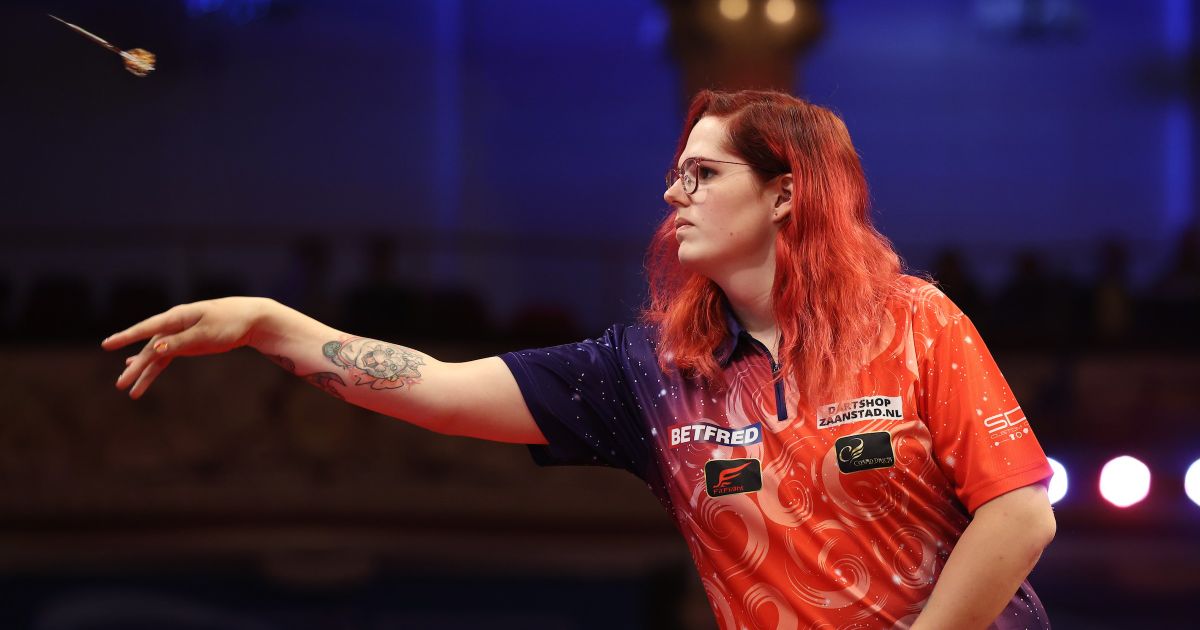
Noa-Lynn van Leuven: Navigating the Complexities of Inclusion and Exclusion in Darts
The world of professional darts, traditionally a sport rich in character and fervent competition, has recently found itself at the heart of a global conversation surrounding inclusivity, fairness, and the very definition of competition. At the center of this dialogue is Noa-Lynn van Leuven, a Dutch darts player whose trailblazing presence as the first openly transgender woman at the Darts World Championship has sparked both celebration and intense scrutiny. The debate surrounding her participation, particularly the calls for her
noa-lynn van leuven ausschluss (exclusion), underscores a broader societal challenge that extends far beyond the oche.
Van Leuven's journey is one of remarkable athletic achievement set against a backdrop of public contention. While her powerful throws and impressive performances have earned her a place among the elite, her identity as a transgender woman has inadvertently placed her at the forefront of a contentious debate, raising fundamental questions about the future of women's sports.
A Rising Star Amidst Unintended Controversy
Noa-Lynn van Leuven's talent on the darts circuit is undeniable. Her ascent has been marked by significant milestones, including her historic debut as the first transgender woman to compete at the prestigious Darts World Championship held at London's iconic Alexandra Palace. This was a moment filled with both personal triumph and a unique atmosphere. During her debut, the energy of the crowd was palpable, a testament to the sport's passionate fanbase. In a memorable incident, the roar of "Noa-Lynn van Leuven!" echoed through the hall, momentarily mistaken by some for the chant of "Michael van Gerwen!" – highlighting her burgeoning recognition and the excitement she brought to the stage.
Her strong performances throughout the year have solidified her position, earning her a spot in two significant tournaments on the Darts Pro Tour in Hildesheim, Germany. Even facing a darts titan like two-time world champion Gary Anderson, resulting in a 0-6 defeat, her mere participation was a profound achievement. Furthermore, van Leuven made history in mid-March, also in Hildesheim, by sensationally becoming the first non-male participant to win a mixed-gender PDC tournament, an accomplishment that further illuminated her skill and the evolving landscape of the sport.
Yet, despite these impressive sporting achievements, the narrative surrounding Noa-Lynn van Leuven has often been overshadowed by the heated discourse regarding her right to compete in women's categories. This unfortunate overshadowing has brought the calls for
noa-lynn van leuven ausschluss to the forefront, creating a complex situation for both the athlete and the sport's governing bodies.
The Deta Hedman Standoff: A Flashpoint in the Debate
The intensity of the debate reached a critical point during the Denmark Open, a tournament organized by the Amateur Darts Association WDF. A quarter-final match was scheduled between Noa-Lynn van Leuven and the revered English player Deta Hedman. Hedman, a 64-year-old Jamaican-born English darts legend with countless titles and three Women's World Championship final appearances to her name, is one of the most decorated female players in the history of darts. However, the anticipated clash never materialized.
Deta Hedman controversially withdrew from the tournament, explicitly refusing to compete against van Leuven. Her reasoning was direct and uncompromising: "I don't think biologically born men should compete in women's sports." For those familiar with the darts scene, Hedman's decision was not entirely unexpected, as she had been vocal for months in her opposition to van Leuven's participation in women's tournaments. This incident served as a stark demonstration of the deep divisions within the sport, bringing the concept of
noa-lynn van leuven ausschluss from a discussion point to a tangible action.
The WDF's Stance and the Scientific Horizon
In stark contrast to Hedman's personal stance, the World Darts Federation (WDF), as the organizing body, maintains a different perspective rooted in its established regulations. The WDF's rulebook explicitly allows transgender women to participate in women's competitions, provided they have undergone gender-affirming hormone therapy for at least one year and can provide medical proof of this.
The WDF's policy is predicated on current scientific understanding. They state, "As long as there are no clearer studies on the visual-spatial differences, the WDF will continue to allow transgender athletes to participate in WDF ranked women's tournaments in accordance with the existing transgender policy." This indicates a reliance on evidence-based decision-making, asserting that, at present, there is no conclusive scientific evidence to suggest that transgender women hold an inherent, unfair advantage over cisgender female competitors once specific criteria are met. This nuanced approach highlights the WDF's commitment to inclusivity while acknowledging the evolving nature of scientific understanding in this complex area. For a deeper understanding of sporting regulations and their impact, you might be interested in
noa-lynn van leuven ausschluss - Article 1.
The Broader Debate: Fairness, Biology, and Sportsmanship
The controversy surrounding Noa-Lynn van Leuven's participation is a microcosm of a much larger, global debate impacting women's sports across various disciplines. Critics, prevalent in the often conservative-leaning world of darts, echo Deta Hedman's concerns. Their arguments frequently center on perceived biological advantages that transgender women might retain after male puberty, such as bone density, lung capacity, and muscle mass, even after hormone therapy. They also sometimes point to factors like the absence of menstrual cycle-related physical challenges as a potential competitive edge.
These arguments underscore the tension between the desire for inclusive sports environments and the imperative to ensure fair competition for cisgender women, who have historically fought for equitable opportunities in sports. The discussion is multifaceted, involving:
- Biological Factors: The extent to which advantages from male puberty are mitigated by hormone therapy.
- Ethical Considerations: Balancing inclusion with fairness for all athletes.
- Evolving Science: The ongoing need for clearer research on the physiological impacts of gender transition on athletic performance.
- Sporting Integrity: Maintaining the integrity and competitive balance of women's categories.
This ongoing conversation requires careful consideration from all stakeholders – athletes, federations, scientists, and fans – to navigate a path that upholds both fairness and inclusivity. The calls for
noa-lynn van leuven ausschluss highlight the urgency of finding sustainable solutions that honor the spirit of competition for everyone. Further details on the wider implications for sports policy can be found in
noa-lynn van leuven ausschluss - Article 2.
Looking Ahead: Inclusivity, Policy, and the Future of Darts
Noa-Lynn van Leuven's journey illuminates the challenges faced by transgender athletes seeking to compete in their affirmed gender. While her talent has brought her to the forefront of the sport, her presence has also ignited a crucial, albeit uncomfortable, conversation. The WDF's current policy, based on the best available scientific understanding, represents an attempt to balance inclusivity with fairness.
As the debate continues, the darts community, like many other sports, faces the task of evolving its policies in response to new scientific insights and societal understandings. The focus remains on ensuring a level playing field while fostering an environment where all athletes, regardless of their identity, feel respected and have the opportunity to pursue their passion. The question of
noa-lynn van leuven ausschluss is not merely about one player; it's about the fundamental principles that will define the future of sport itself. It calls for thoughtful dialogue, evidence-based policy, and a commitment to upholding the integrity and joy of competition for everyone involved.